Thursday, 16 October 2014

Week 9: Scoping & Creating a Brand Image 14/10/14

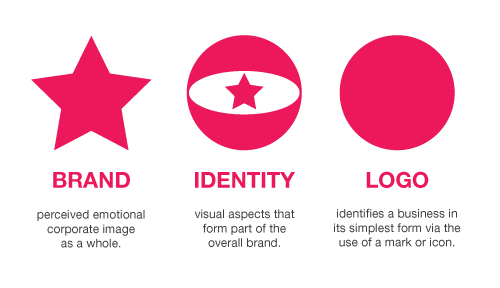
During this tutorial we discussed the project scope for the upcoming project and how to create a brand image. We identified that the a brand image is not just the logo, identity or product. It is the feeling a consumer has towards that product. Essentially creating a sense of trust between the consumer and the product. In terms of the Kopi shop project, this taught me to think further than just designing for aesthetics, but rather to design with replication of a strong feeling of trust in the quality of the product.

During the scoping of the project, I learnt that we needed to create something that the consumer needs, not what they want. Ideally placing the Kopi shop brand image in it's own unique position in terms of competition. However I am still in the process of brainstorming ways to differentiate Kopi from the rest of the competition. A line of thought I had was to consider what makes coffee a social statement, then trying to extract an idea from that concept but it is difficult.

This image helped to reinforce my understanding of a brand image.


Bibliography: Justcreative.com,. (2014). Retrieved 20 October 2014, from http://justcreative.com/wp-content/uploads/2010/04/brand-identity-logo-explained1.jpg

Thursday, 9 October 2014

Week 8: Divergent & Convergent Thinking 9/10/14

During this tutorial we introduced the third assignment and discussed convergent and divergent thinking. In order to further understand divergent thinking we did two activities. One being brainstorming the different ways you can use a fork and the other finishing off a drawing. From the fork activity it taught me that the majority of ideas I came up with were only extensions of one concept, meaning they were not unique. In order to get a unique idea I had to go through about 10 average ideas before reaching an original idea. In terms of the upcoming project on designing an identity for a cafe, this activity reinforced the importance of the brainstorming step rather than trying to stick to the idea that seems the strongest at the time. The other activity of finishing off the drawing also helped to emphasis this point. 

At the same time these activities helped me to understand how to use divergent thinking in reality, as well as understand convergent thinking. Below is an image that illustrates my understanding of divergent and convergent thinking. Divergent being trying to come up with as many ideas as possible, whereas convergent being combining all the ideas into one single idea. 


Bibliography: Debbiggar.com,. (2014). Retrieved 11 October 2014, from http://www.debbiggar.com/uploads/2/8/2/5/28255125/5202770_orig.jpg

Monday, 29 September 2014

Week 7: Reflection on Project 1 (Class Free Week) 2/10/2014

Project 1 was my first experience in creating a solution to a problem that seemed to have endless different angles to approach. It was tough brainstorming ideas to solve the problem, as each solution had its drawbacks. I also had little knowledge of interest and how the bank works, so it did seem overwhelming at the beginning. After discussing several ideas with classmates I decided upon the idea of a scare campaign with reverse psychology. After coming up with the idea the research was fairly straightforward.

If I was to improve my Concept report, I would focus more on brainstorming more ideas. This would help to decide which angle was the absolute best to use, allowing me to compare a large amount of ideas. Also I would do some rough research into ideas to get an idea if they did work in society, rather than just using my own intuition to decide its effectiveness. 

Overall this assignment offered a lot of freedom which is why I felt like it was overwhelming at the beginning. However once you have an idea it becomes much more straightforward.

Here is an image that reflects how I felt while undertaking this project.

Bibliography: Courses.evanbradley.net,. (2014). Retrieved 11 October 2014, from http://courses.evanbradley.net/wiki/lib/exe/fetch.php?media=divergent_thinking.jpg

Thursday, 25 September 2014

Week 6: Concept Report 25/9/14

During this tutorial we received feedback on our drafts for the concept report. The issue I had was answering the question of "Why is my concept the best in this situation", for the conclusion. As I knew there were drawbacks within my concept of a scare campaign that uses reverse psychology. After the tutorial I learnt that the campaign did not have to be perfect, but so long as it had the justification to explain how it was effective was enough, while acknowledging the drawbacks.

This made me reflect upon other potential ideas and critique within my concept report, pointing out the potential positives and negatives. Rather than leaving the ideas without explanation, this helped to justify my reasoning for choosing a scare campaign.

The idea of the scare campaign originated from the popular smoking scare campaigns with the graphic images. They had a strong impact on myself due to the how disgusting the imagery was, which leans me away from smoking. The reverse psychology aspect of my scare campaign came from talking about the attitude of people aged 18-25, in a previous tutorial. As reverse psychology can be a way to influence people in saving money, as it attacks people who are more stubborn.

Bibliography: (2014). Retrieved 26 September 2014, from http://scgordon.files.wordpress.com/2010/01/british_heart_foundation_smoking_quit.jpg

Wednesday, 17 September 2014

Week 5: Ideation 18/9/14

In this tutorial, we grouped up and discussed our ideas for the concept report related to saving money. From the discussion I had I learnt that there are multiple angles that I did not think of when I devised a plan to influence people to save. An example of this was; would it be better to encourage people to spend less rather than save money? And another was that does telling someone to save encourage them not to save due to their personalities being revolved around breaking the rules? Both questions helped to broaden my perspective on the problem of people not saving for the future. 

Since my idea is a scare campaign to get people to save. I thought the best course of action would be to show the viewer a insight into what their life would be like without saving. After the tutorial I was able to further develop my idea. Instead of just showing the viewer the consequences of not saving, include a message saying something along the lines of "go ahead and spend your money, throw your future away". This makes the viewer reflect on their own actions as they now think of spending as a way to throw away their future. This has a stronger impact than saying "save money for the future", as majority of the people aged 18-25 already understand the importance of saving. Also another thing I did not take into account was how specific would my target group for my scare campaign would be, as I was trying to influence everyone which is ineffective as it will be weaker than a more focused campaign. 

We also briefly touched upon ideation. The main point being the importance of defining the problem. Also only through attempting to find a solution will you then be able to find a concept, with the help of research to guide your ideas in the correct direction.

Defining the problem should be the first step in every issue, as it shapes the way you approach the issue.

Bibliography: (2014). Retrieved 18 September 2014, from http://www.bizzdesign.com/assets/BlogDocuments-2/20131023_PeterMatthijssen/Lean-DMAIC-phases.png

Wednesday, 10 September 2014

Week 4: Design Methods 11/9/14

This tutorial we discussed the purpose of a design method. I learnt that it serves as a guideline to the thought process while designing something, rather than it restricting the thought process. It could also be used to impress clients as it shows professionalism. A good use of a design method is to use it to help introduce people that are new in that field, into the thought process. 

We also briefly touched upon qualitative and quantitative research. Qualitative being explained by what people do, and quantitative is shown by what people say. In terms of the concept report (assignment 1), it is very important as people tend to act differently from what they say. What this means is that asking how someone spends their money, compared to giving them money to spend on anything, will yield different results. This tutorial helped me to understand how to undertake research more effectively and will definitely help for the first assignment. 

This is an example of a design method flow chart for waste management. Without any knowledge in that field, I am able to get a grasp on how the process works.


Bibliography: Encycle.com.au,. (2014). Retrieved 11 September 2014, from http://www.encycle.com.au/images/flowchart1.jpg

Wednesday, 3 September 2014

Week 3: Wicked Problems 4/9/14


During this tutorial we discussed how to redesign a watch. Within our groups we framed this problem so that it no longer was restricted to the creation of a watch. We did this by defining the problem as we needed something to tell us the time efficiently, as well as be comfortable. By framing the problem this way it opens up new ways to tell time utilizing different senses to tell the time such as having smell tell us when it is dinner time. 

Another option was to implement a way to tell time in earrings, rings, necklaces or various other accessories. Since within our group we kept asking the question of why do we need a watch if we just have a phone. With the accessory concept you can now have a watch within your favourite accessory, increasing the speed you check the time as well as reducing the amount items you need to carry. The accessory idea was inspired by why we wear watches when you have a phone, the reason being it was a fashion statement. This naturally lead to the time telling accessory idea. 

Before going to the tutorial, the way I approached redesigning the watch was completely different. I was only focused on improving the watch itself, so I thought of ways to improve readability and functionality. I did not think of improving the way we comprehend time or ways to create a watch within different objects of everyday life. The tutorial helped me understand the importance of framing a question in order to open up new solutions. 

Here is a image of a watch that is a solution to the problem of creating something to tell the time efficiently as well as being convenient. This reinforces the importance of framing the question correctly, as it opens up a new perspective upon a problem.


Bibliography: Thehottestgadgets.com,. (2014). Retrieved 4 September 2014, from http://thehottestgadgets.com/wp-content/uploads/2008/08/nailwatch1.jpg

Thursday, 28 August 2014

Week 2: Design Process - 28/8/14

During the tutorial we discussed the non linear element of designing, as well as create a bridge out of paper.

After some quick brainstorming and planning we began to build the bridge. Once we started building we were in a constant loop of thinking of ways to make our design stronger than reflecting on previous weaknesses we had experienced with our bridge. All while keeping the purpose and time constraint in mind while building. In the end however our idea we originally had in mind had completely changed. It is very hard to come up with a clear cut design since there is too many factors that cannot be certain unless extensive testing is done to find out what's weak or strong. This is the non-linear element of our planning that I learnt through creating the bridge, since we may discover new and more efficient ideas while testing. Which is both equally fun and frustrating. 

In the context of creating signs for a hospital for the homework. You would first consider the clients and the purpose. Then move onto brainstorming what would make a suitable sign, then coming up with a rough The next process is testing multiple designs in order to test their functionality. The process of testing can branch off into many different options and it is hard to predict that it will end up to the end product as planned. Then you constantly reflect on past designs to improve your current design, then when the current design does not work, you loop back to reflecting. Eventually you end up with a improved version of your planned project which might be similar or completely different the to plan.

Basically the design process is endless and keeps going in a circle until you come to a conclusion that you are satisfied with. How you come up with this conclusion can be done in many different ways. Although a design process will mostly start with some research and planning out a rough outcome. 


Bibliography: Sapdesignguild.org,. (2014). Retrieved 28 August 2014, from http://www.sapdesignguild.org/resources/images/UCD_new.gif

Wednesday, 20 August 2014

Week 1: Design Activity - 21/8/14

During this tutorial the main element of discussion was what makes something a design activity, as well as what are examples of unexpected activities would be considered a design activity.

My idea of a unexpected design activity would be painting. In painting you need to decide what you are planning to paint and ultimately how you are going to get there. This is done through deciding how to layer colours, what brush techniques, contrasting colours, how to mix colours, textures and so on. Relating this back to design, the planning of the painting could be seen as deciding who the client is and what the limitations are. Since painting is limited to the amount of paint you have, the type of canvas you are painting on and the types of brushes you have. Another design activity in painting is the brush techniques, as they are reflective on what program or printer is most efficient to create the product. Choosing the correct paints and deciding how to layer the paint is similar to understanding the program you are using to create the product.

Before the tutorial I was not able to justify painting as a design activity with this amount of detail, as I was struggling to define what is a design activity. Through thinking of something in turns of a graphic design process I was able to learn how to justify something as a design activity through listening to other students ideas. For example I was grouped with a student who said that creating Dirt Ramps was a design activity. At first I was not able to understand how as it seems completely unrelated. She quickly explained that the creation process of a dirt ramp is much more complicated than people think, since you need to take into account; type of dirt, drainage, aesthetics, functionality, speed and strength. Each one of these elements can be reflected as things that a graphic designer has to go through, for example the type of dirt is similar to being limited by the tastes of the client.

Another topic of discussion was of what makes something a craft or a design. At first I was unable to find something that could differentiate both activities, as they are very similar. A student in the tutorial mentioned that design usually has an objective whereas craft is mainly for recreational purposes. Craft and design both share similar qualities but within the tutorial we came to the conclusion that one distinct element separated them. Craft is considered to be only for recreational purposes and design always has an objective.

This gif helped me to understand the process of creating a painting more thoroughly:

Bibliography: 
Fox, D. (2014). 33.media.tumblr.com. Retrieved 23 August 2014, from http://33.media.tumblr.com/88e4d3ad7bc45c8502ac20fe8bc4f323/tumblr_mtainpO7si1qc81uio1_500.gif